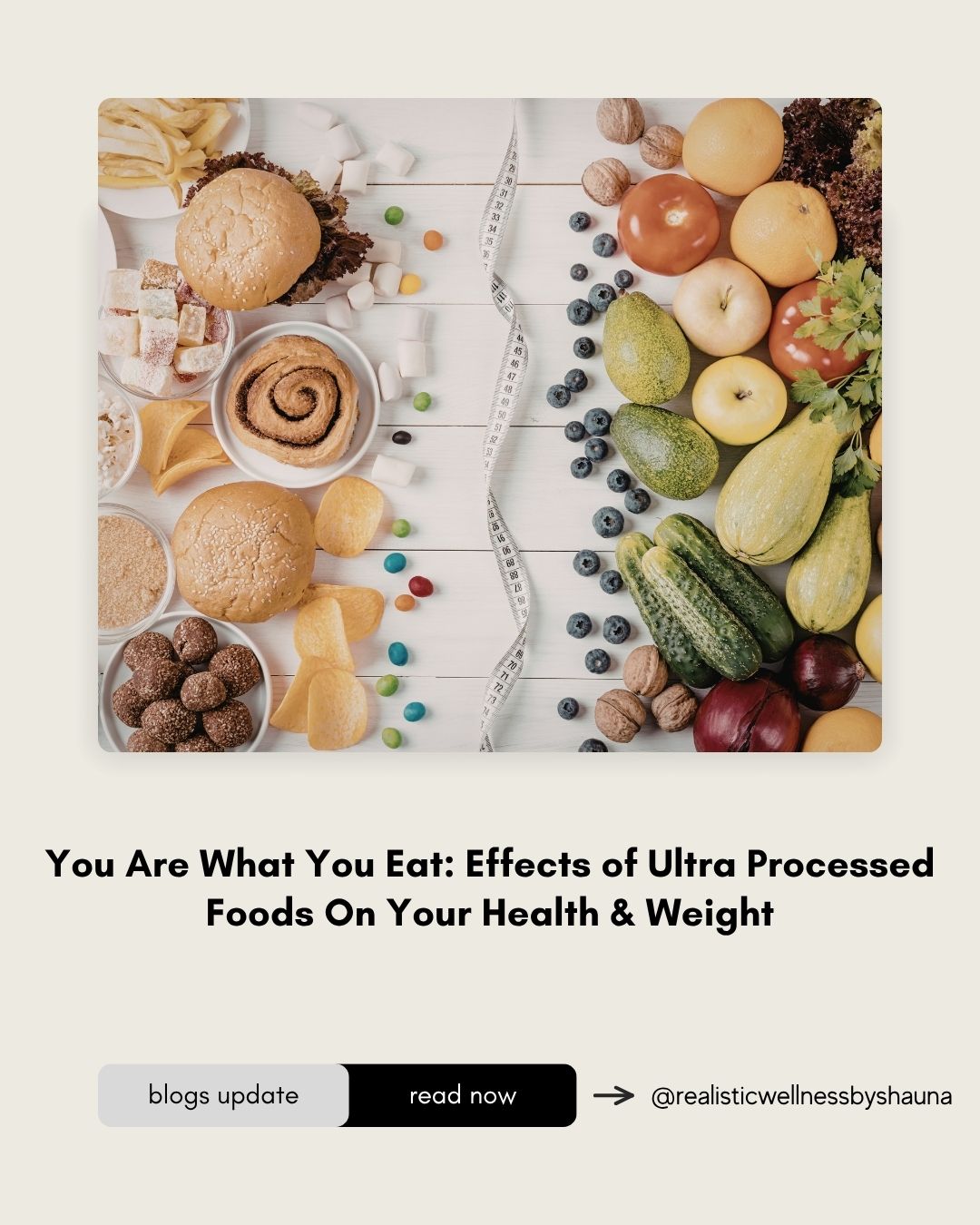

If you peruse the internet and are into the health & fitness space, you’ll see people say calories in vs. calories out is all that matters for weight loss. You’ll also see fitness professionals/influencers who — to me — just want to appear “cool” by cursing, and saying that you can lose weight by just cutting calories, even if you eat a fast-food burger every single day, as long as you’re in a calorie deficit.
To me, this is irrelevant. If you’re filling your body with processed, artificial ingredients, you will not feel good or be able to perform at your best. It doesn’t seem worth it to work out so hard to achieve your physique goals if you aren’t going to feel healthy and energized.
Here’s the truth: processed foods don’t just affect your weight — they can change the way your body functions from the inside out. They influence your hormones, digestion, inflammation levels, and even your mood. Over time, they can make it harder to build muscle, recover from workouts, and keep your energy steady.
Today, we’ll dive into how processed foods impact your body, health, and weight — and why choosing higher-quality foods can transform the way you feel and the results you see.
A Quick Rant About “Processed” Confusion
This is something that gets me.
One of my biggest pet peeves is when people try to rationalize eating ultra-processed foods by saying, “Well… canned tuna, yogurt, and frozen berries are processed foods too!”
No. They’re. Not.
Yes, these foods have been packaged — but that’s not the same thing as being ultra-processed. Canned beans, plain yogurt, and frozen berries are still whole foods. The “processing” here is simply freezing, fermenting, or canning to make them safe and shelf-stable. They still retain their original structure, nutrients, and health benefits.
Ultra-processed foods, on the other hand, are products made with refined flours, industrial oils, artificial flavors, and other lab-made additives you wouldn’t find in your kitchen. There’s a huge difference between berries in a freezer bag and a neon-colored breakfast pastry that could survive the apocalypse.
So next time you hear someone saying this (even dietitians!) I want you to think about that. Just because it’s in a package doesn’t make it a “processed” food.
When the Package Is the Problem
Even the healthiest foods can be compromised if the container they’re stored in leaches harmful chemicals into them.
Back in 2009, Consumer Reports (then called Consumers Union) tested a variety of packaged foods — from tuna to soups to canned beans — and found that almost all of them contained BPA (bisphenol A) from the lining of the cans. Even brands labeled as organic & BPA-free tested positive.
Why This Matters
BPA is an endocrine disruptor — meaning it can interfere with your hormones by mimicking estrogen and disrupting other hormone systems like thyroid function.
Research is especially focused on its effects at low doses, looking at links to reproductive health issues, endocrine disruption, and possible connections to diseases like cancer and cardiovascular problems. While the FDA maintains that BPA is safe at current levels in food, studies continue to explore its long-term impact — particularly in vulnerable groups like infants and children.
BPA has also been linked to:
- Hormonal disruption – Throws off estrogen and thyroid balance, affecting metabolism, energy, and mood.
- Reproductive health issues – Linked to infertility, early puberty, and changes in reproductive organ development.
- Metabolic problems – Associated with higher risk of obesity, type 2 diabetes, and heart disease.
- Brain and behavior changes – Some studies suggest links to ADHD, anxiety, and depression in children.
- Possible cancer risk – Still under investigation.
Many brands now advertise “BPA-free” cans and bottles, but some have swapped BPA for similar chemicals (like BPS) that may have similar effects. The safest move is to limit canned and plastic-packaged foods when possible — especially acidic or fatty foods, which can leach more chemicals from the lining.
Other Chemicals to Watch Out For
BPA isn’t the only chemical that can creep from packaging into your food (and then into your body). Here are a few others:
- Phthalates – Used to make plastics more flexible; can disrupt hormones and have been linked to developmental disorders.
- PFAS (“Forever Chemicals”) – Found in fast-food wrappers, pizza boxes, and microwave popcorn bags; linked to cancer, thyroid problems, and immune suppression.
- Microplastics – Tiny particles from bottles and packaging; found in water, food, and even human organs. Infants drinking from plastic bottles may ingest up to 4.5 million microplastic particles a day.
- Heavy Metals (Lead, Cadmium, Mercury) – Sometimes in packaging inks and adhesives; can damage brain development and the nervous system.
Packaging types to watch out for:
- Plastic containers (especially when heated)
- Grease-resistant wrappers and boxes (pizza, burgers, microwave popcorn)
- Recycled cardboard packaging (possible mineral oil hydrocarbon contamination)
- Metal cans (often lined with BPA or similar chemicals)
- Packaging with colored inks or adhesives that may contain heavy metals
Easy Ways to Reduce Your Exposure
Do:
✔ Store food in glass, stainless steel, or ceramic
✔ Choose fresh or bulk foods instead of pre-packaged
✔ Use food-grade silicone wraps instead of plastic film
✔ Carry a reusable water bottle and coffee cup
✔ Wash hands after handling packaging
✔ Look for BPA-free, PFAS-free, and phthalate-free labels
✔ Transfer takeout to safer containers before eating (this includes Factor meals!)
Don’t:
✖ Microwave food in plastic (heat makes leaching worse)
✖ Store fatty or acidic foods in plastic
✖ Reuse single-use plastic containers
✖ Drink from plastic bottles daily
✖ Assume “recyclable” means safe — it doesn’t
✖ Choose fast food in grease-resistant wrappers or boxes
Now, Let’s Talk About the Food Itself
“Research has shown that diets high in ultra-processed foods are linked to more than 30 health conditions, according to an umbrella review of meta-analyses that was published in The BMJ. More exposure to ultra-processed foods was associated with a higher risk of dying from any cause. There were also strong ties with higher consumption and cardiovascular disease-related deaths, mental health disorders, and type 2 diabetes.” — American Medical Association
“Ultra-processed foods are industrial creations made with little—if any—whole foods that often contain large amounts of added sugar and salt and are typically infused with artificial colors and additives.” — Dr. Stephen Devries, MD, AMA
A massive 2024 umbrella review published in the British Medical Journal analyzed dozens of studies and linked higher ultra-processed food intake to 32 different adverse health outcomes.
The strongest evidence found:
- 50% higher risk of dying from cardiovascular disease
- 12% higher risk of developing type 2 diabetes
- Higher rates of anxiety and common mental disorders
Other significant links included:
- 21% higher risk of death from any cause
- 66% higher risk of heart disease-related death
- 40% higher risk of type 2 diabetes
- 55% higher risk of obesity
- Greater risk of depression, sleep problems, and respiratory issues
Bottom line: The more of these industrialized foods you eat, the more you stack the odds against your long-term health. Enjoy them occasionally if you like — but they shouldn’t make up a large part of your diet.
How to Make Easy Swaps
1. Don’t fall for the “healthy” label.
Just because the package says “natural” or “protein-packed” doesn’t mean it’s good for you. Flip it over. If the first ingredient isn’t a real food — or you can’t pronounce half of them — put it back. A lot of “healthy” snacks that target fitness goals are packed with artificial colors, preservatives, and sugar alcohols.
2. Build meals from real food.
Fresh veggies, fruit, beans, and whole grains should be your base. Frozen veggies and canned beans are great options — just go for the ones without a bunch of extras added. You can even buy frozen rice and quinoa at some grocery stores. Even better, bulk up your meals with cauliflower rice and shredded cabbage.
3. Shop smart.
Yes, the produce section is your friend — but the middle aisles have good stuff too, like oats, rice, dried beans, and frozen fruit. Skip the bakery and deli if you’re trying to cut the salt and sugar. Don’t forget about nuts and seeds either — you can find these in the center of the store too.
4. Cook at home more often.
Even a simple stir-fry or salad with a protein is better than most grab-and-go options. Plus, leftovers = lunch tomorrow. I like to grab a veggie medley from the produce aisle and add a protein like tofu, tempeh, or beans, seasonings, and coconut aminos for a quick, healthy dinner.
5. Start small.
If you eat snack cakes every afternoon, try swapping them for fruit and nuts a few days a week. If you hit the drive-thru three times a week, cut it to one. Little swaps add up. Even swapping one processed snack per day for something like celery and peanut butter or veggies and hummus can make a huge difference in your energy and hunger levels.
6. Do what works for you.
In the beginning just make ultra-processed foods an occasional treat, not your main food group. If you save them for once or twice a week, you’ll enjoy them more — and you’ll enjoy your real, whole-food-based diet more. The less you eat addictive processed foods, the less you’ll actually want them. The ultimate goal is to eliminate them completely…but that is something that takes some effort to do.
Final Thoughts
Remember: you don’t have to overhaul your whole life all at once — just start with one swap and build from there. Before you know it, you’ll feel the difference. I started small back in 2012 when I began my health journey, and I’m still working on it today. Every step you take is a step in the right direction.
See you next time,
Shauna
References
- National Library of Medicine. The Impact of Ultra-Processed Foods on Human Health.https://pmc.ncbi.nlm.nih.gov/articles/PMC9671506/
- MDPI Foods Journal. Effects of Food Processing on Nutritional Quality. https://www.mdpi.com/2304-8158/13/19/3125
- ScienceDirect. Dietary Patterns and Health Risks Associated with Ultra-Processed Foods.https://www.sciencedirect.com/science/article/abs/pii/S2215153221001835
- American Medical Association. What Doctors Wish Patients Knew About Ultra-Processed Foods.https://www.ama-assn.org/public-health/prevention-wellness/what-doctors-wish-patients-knew-about-ultraprocessed-foods
- The BMJ. Ultra-Processed Food Exposure and Adverse Health Outcomes: Umbrella Review.https://www.bmj.com/content/384/bmj-2023-077310